
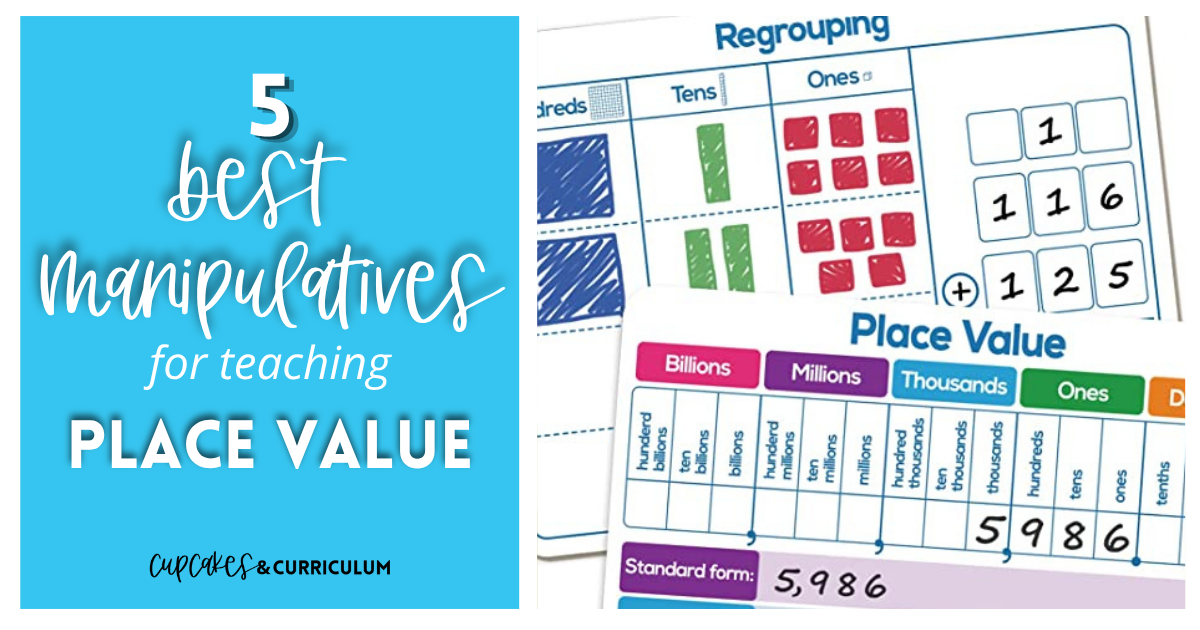
Place value is abstract until kids can hold it. A “ten” is just a word until a student picks up a rod of ten cubes and physically swaps it for ten singles. A “hundred” is a meaningless place on a number until they can stack ten of those rods together and feel how much bigger it is.
This is the concrete-pictorial-abstract progression in plain English: students need to handle the math before they can picture it, and they need to picture it before they can write it. Skip the concrete step and you get students who can complete a place value worksheet in second grade but cannot tell you what the 4 in 347 actually means.
The right manipulatives for teaching place value make the concrete step possible without eating your prep period. The five below are the ones I keep coming back to.
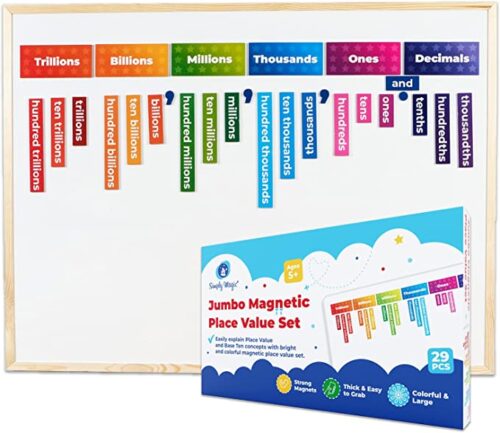
Best for: Kindergarten through 2nd grade, whole-group instruction Use it for: Building 2- and 3-digit numbers, identifying tens and ones
This chart sticks directly to your whiteboard and keeps your teaching model visible to the back row, which matters when half your class is on the rug. The columns and color-coding give students a clean visual of how digits change meaning when they shift left or right.
Try this: Build a number with the magnetic pieces, then call a student up to “steal” one of the tens. Ask the class what happened to the number. The conversation that follows usually does more than the next ten minutes of direct instruction would have.
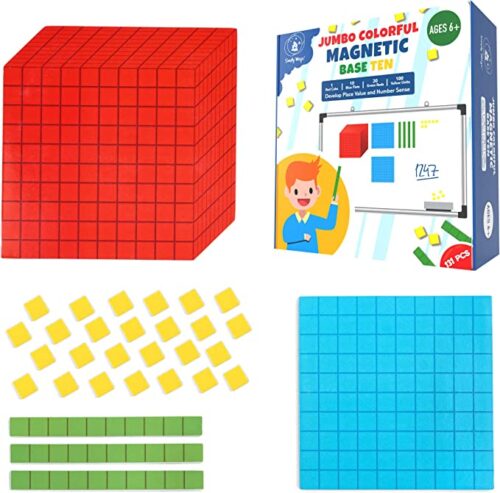
Best for: K-5, especially regrouping in addition and subtraction Use it for: The full place value progression, from counting to decimal models
If you can only buy one manipulative on this list, buy this one. Base ten blocks scale across every grade and every place value concept you’ll teach, including decimals if you reframe the pieces.
Try this: For older students, use the small cubes as tenths, the rods as ones, and the flat as a ten, and suddenly you have a decimal manipulative without spending another dime. This same set covers students from kindergarten counting to fifth-grade decimal addition.
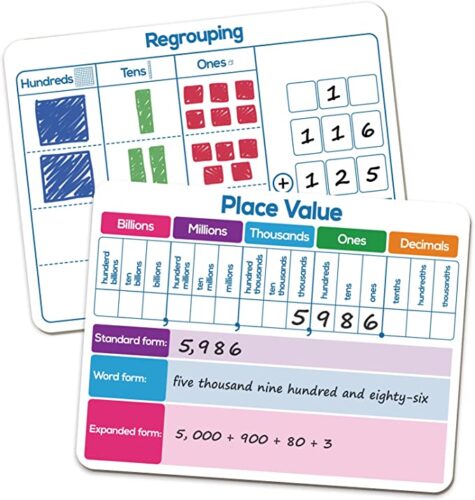
Best for: 1st through 5th grade, independent practice and small groups Use it for: Standard form, expanded form, and comparing numbers
The aligned columns force students to line up digits correctly, which quietly fixes a lot of the “53 + 7 = 60” type errors that are really place value errors in disguise. They’re also double-sided, so you get extension activities (multiplication, division) on the back without buying a second set.
Try this: Pair students up. One calls out a number, the other writes it in expanded form. Switch every five problems. Quick, low-prep, and you can hear the misconceptions while you walk the room.
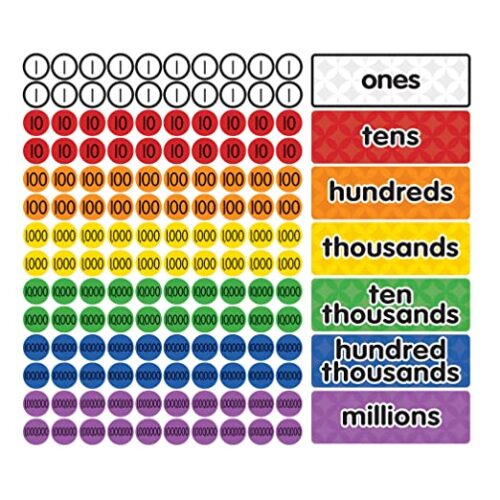
Best for: 2nd through 5th grade, regrouping and large numbers Use it for: Trading 10 ones for 1 ten, or 10 tens for 1 hundred
These disks are color-coded by place value, and students physically swap them when they regroup. That swap is the moment regrouping clicks for kids who have been crossing out and rewriting digits on paper without understanding why.
Try this: Set up a “trading station” where students earn disks by solving problems and have to trade up every time they collect ten of a color. The trading IS the lesson. For students who are stuck on regrouping, this can be the breakthrough.
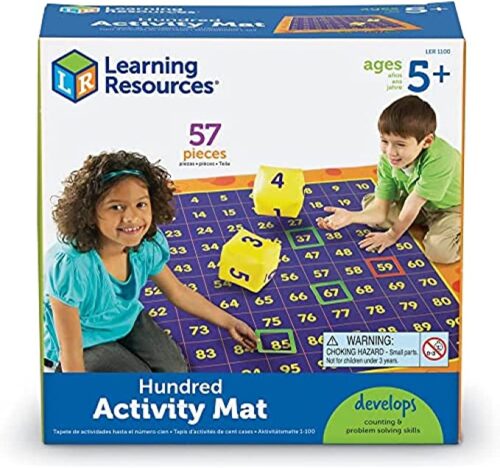
Best for: Kindergarten through 2nd grade, floor work and movement Use it for: Counting to 100, skip counting, locating numbers
The mat is big enough that students can stand on it, which sounds silly until you see how much faster movers learn when their feet are involved. It’s also a sneaky way to fold movement breaks into a math lesson without losing instructional time.
Try this: Call out a number and have a student walk to it. For older students, call out a math problem (“five tens plus three ones”) and have them walk to the answer. For your wiggliest learners, this might be the only place value practice that actually sticks.
You do not need all five. Pick based on the grade you teach, the concept you’re stuck on, or the budget you have.
If you only buy one: Base ten blocks. They cover the most ground across the most grades and the most concepts. You can teach kindergarten counting and fifth-grade decimal addition with the exact same set.
If you teach K-2: Get the Place Value Hundreds Mat and the Magnetic Place Value Chart. Floor work plus a clean visual covers most of what your students need at this stage.
If you teach 3-5: Get the Place Value Disks and the Dry Erase Boards. Regrouping practice plus structured independent work, which is most of what place value looks like in upper elementary.
If you have a student who’s stuck: Pull base ten blocks first. If they still cannot regroup, switch to disks. The trading motion solves what static blocks sometimes cannot. For more on differentiating math instruction, my post on helping the student who struggles in math walks through the moves I make for kids who need extra support.
Once your manipulatives are in rotation, the next piece is practice that doesn’t feel like another worksheet. My post on place value games for stations and small groups covers a handful of low-prep games that pair with all five of these manipulatives.
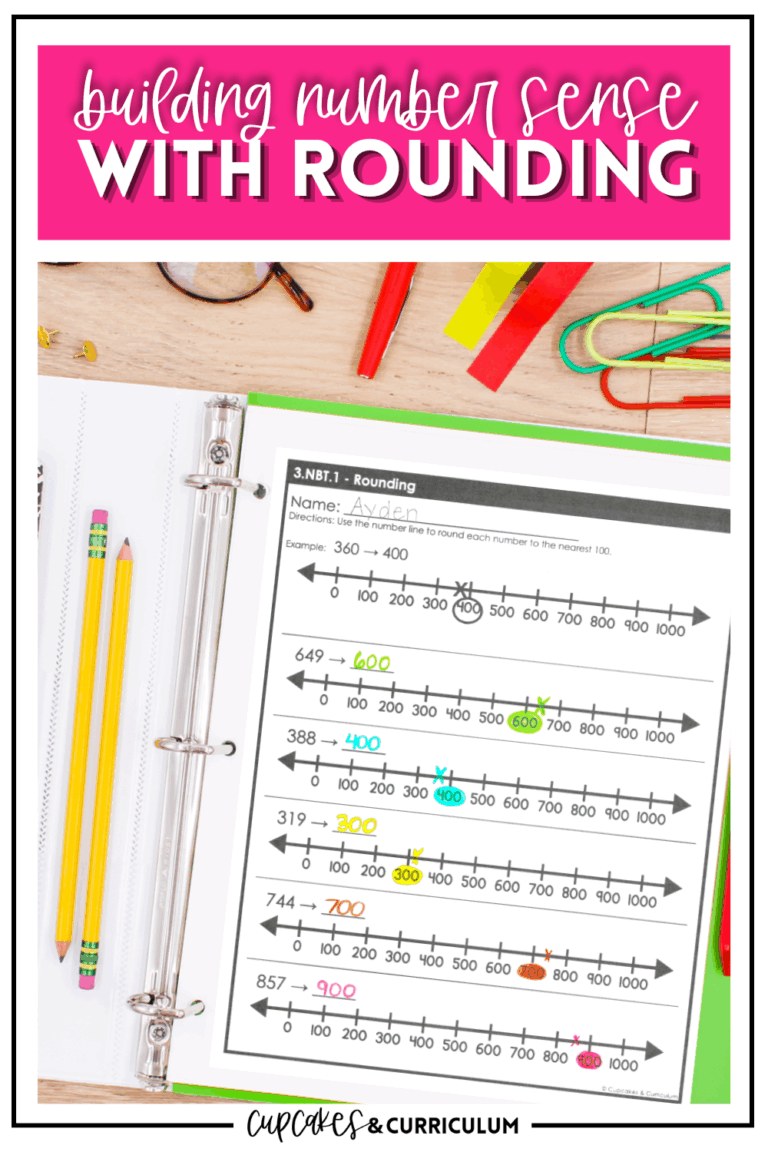
For seasonal practice, Thanksgiving place value practice gives you a holiday-themed option for November, and once your students master place value, rounding to the nearest 10 and 100 is the natural next skill.
If you want printable place value resources to pair with these manipulatives, my place value collection on TpT has worksheets, centers, and assessments aligned to K-5 standards.
You’re also working through the manipulatives series. Up next: manipulatives for teaching fractions, which covers the same kind of breakdown for fractions instruction.
*Disclosure: This article contains affiliate links to qualifying purchases. I may receive a small commission if purchases are made – at no cost to you.