
Multiplication and division are the two concepts that most determine how a third grader feels about math for the rest of elementary school. If they click, math feels doable. If they don’t click, every topic that follows (fractions, area, division with remainders) feels like trying to build on sand.
When I was teaching third grade, I spent a lot of energy trying to get the sequence right. Too fast on fact fluency and students checked out. Too slow on strategies and they never moved past counting on their fingers. This post is the scope and sequence I landed on after a few years of tweaking, along with the specific resources I used at each stage.
Here’s how I taught 3rd grade multiplication and division, stage by stage.
Before the stages, the big picture. The order matters more than the pace.
You can compress or stretch this, but skipping a stage almost always causes a problem two stages later!
Before strategies, before facts, before anything timed, third graders need to understand what multiplication actually is. Not just the definition. The concept.
I started every multiplication unit with arrays and equal groups. Concrete before abstract. Manipulatives, drawings, and simple equal-groups problems using objects students could physically move around. The goal at this stage is the mental picture, not accuracy or speed. Multiplication means “this many groups of this many things.”
The resource I leaned on most at this stage was Arrays and Multiplication Task Cards. The task card format works well here because students can do one card at a time, figure out each array, and not feel buried in a full worksheet.
Once students had the concept, I moved into strategies. This is the stage where the distributive property enters the picture, and it changes everything.
A quick overview of what I taught at this stage, roughly in order:
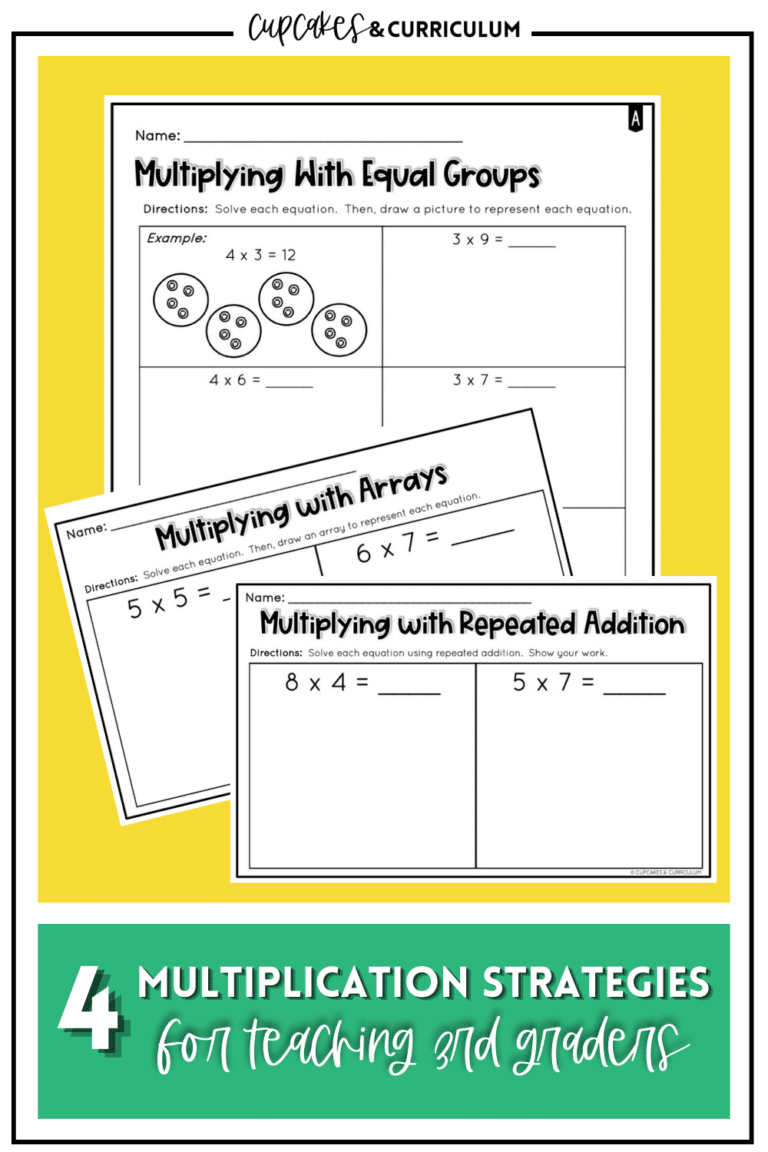
If you want the deeper dive on these, I broke them all down in 4 Effective Multiplication Strategies for Teaching 3rd Graders.
For a ready-to-go strategies pack with anchor charts, print-and-go worksheets, and quick checks, Multiplication Strategies is my go-to!
For the properties specifically (commutative, associative, distributive, identity, zero), I used my Properties of Multiplication unit, which is a 7-day sequence that teaches one property per day. The distributive property is the star here. It’s the one that unlocks harder multiplication facts. 7 × 8 stops being scary when students can see it as 7 × 5 + 7 × 3. I walked through exactly how I taught that concept in teaching the distributive property with an area model.
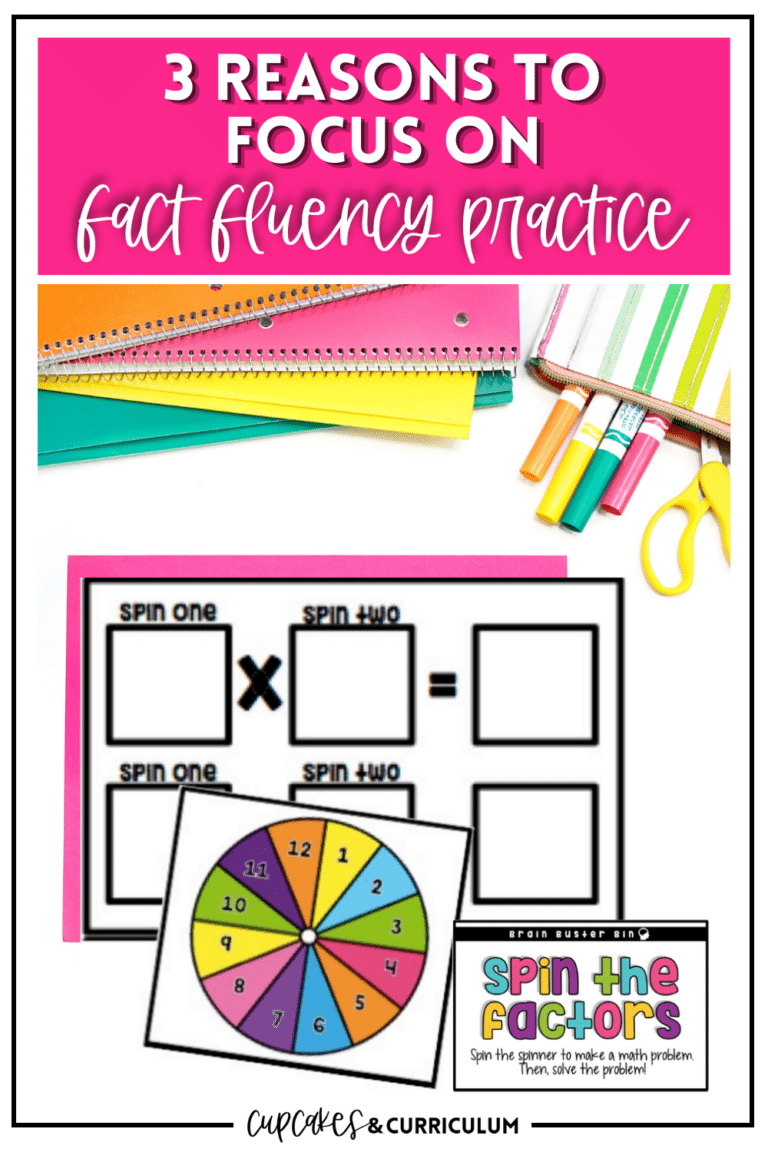
This is the stage most teachers want to rush and most students need to slow down on. Fact fluency matters because without it, every harder math concept takes twice as long. But it only works when strategies come first. I wrote more about why this order matters in 3 important reasons to focus on fact fluency practice.
The trick is keeping it fresh. Flash cards alone will stop working by October! What kept my students engaged was rotating formats across the week.
For detective-style practice that felt like a game, Multiplication Table Detectives has six different activities where students investigate factors and products instead of drilling. My students didn’t realize they were practicing facts, which is exactly what I wanted 🙂
For seasonal variety, Ornament Arrays is a Christmas-themed array scoot activity that works as fact practice and as a December morale boost. I pulled it out every year right before winter break when attention spans were at their limit.
I didn’t introduce division until multiplication felt solid. Not mastered, solid. Students should understand what multiplication is, have strategies for unfamiliar facts, and be actively building fluency. If you push into division before that, you end up teaching two disconnected operations instead of one inverse relationship.
The framing that worked for my students: “We already know multiplication. Division is just asking the same question from the other direction.”
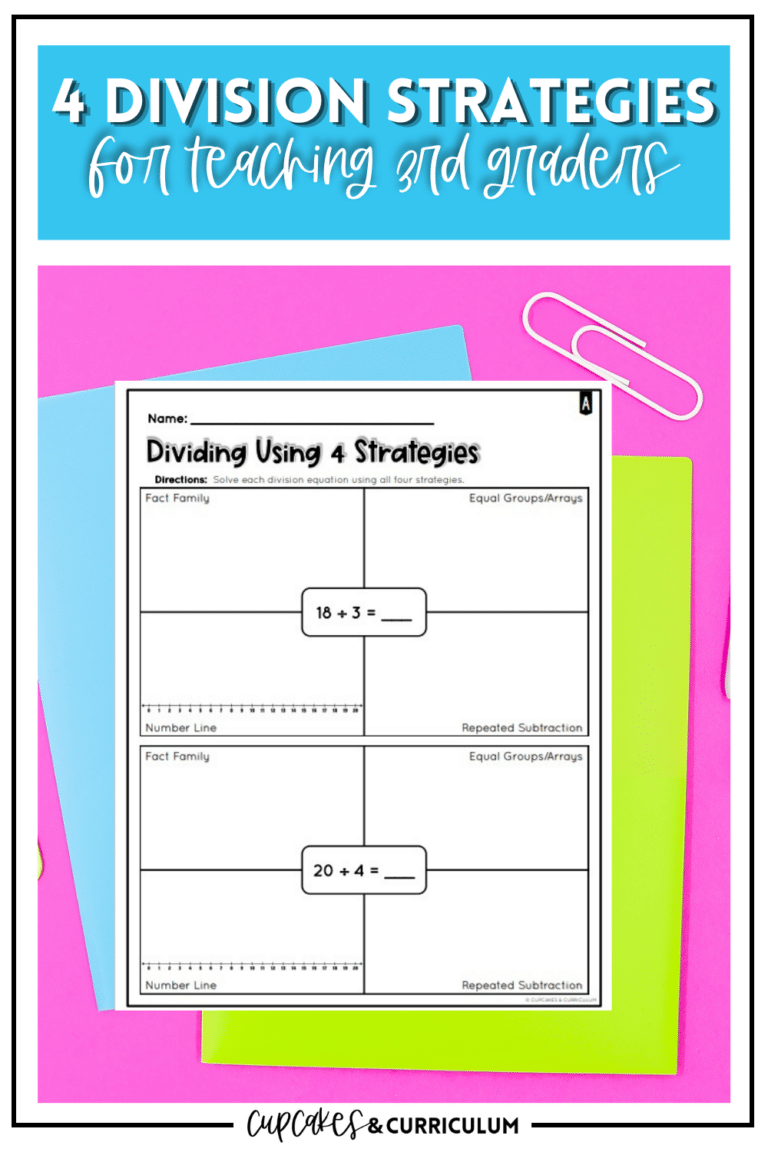
For the full division teaching sequence, see 4 Effective Division Strategies You Need for Teaching 3rd Graders. The strategies mirror the multiplication ones: equal groups, repeated subtraction, fact families, using multiplication to find the answer.
My main resource for this stage was Division Strategies, which mirrors my multiplication strategies pack in structure. Anchor charts for the wall, print-and-go worksheets for daily practice, quick checks for data.
The last stage is where students apply both operations in context. Word problems are where multiplication and division separate the students who memorized from the students who understood.
For single-operation practice, Third-Grade Multiplication and Division Word Problems covers 3.OA.3 with standards-aligned worksheets I used as morning work, homework, and review.
If you want one resource that combines both operations with the strategies support built in, the Multiplication and Division Strategies bundle pulls charts, worksheets, and homework into one pack. This is what I’d hand a new teacher or student teacher who needed to cover the whole topic!
Two books I used consistently to open or close units. Mentor texts give students a story hook that makes the math feel less like a worksheet and more like something that happens in the world.
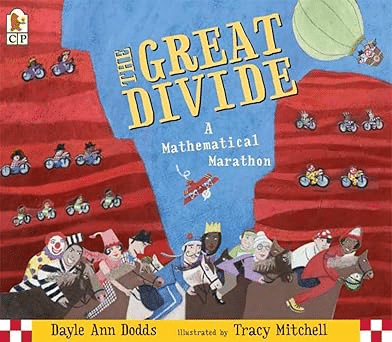
Eighty racers start the marathon, and the field gets divided in half, thirds, quarters, and beyond until only a few make it to the finish line. I used this at the start of a division unit to introduce the concept through story before touching any equations. Kids who were intimidated by the word “division” got curious instead! You can find it on Amazon here.
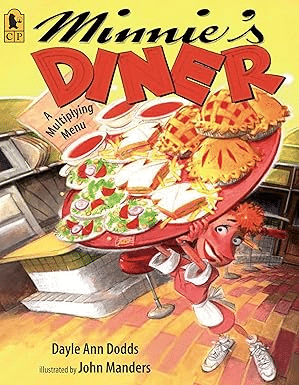
Each customer in Minnie’s Diner orders twice as much as the last one. By the end, the order is absurd, which is exactly the point! I used this to make multiplication feel real and to give students a concrete sense of how fast numbers can grow when you multiply. Grab it on Amazon here.
Every third grade class has a few students who hit a wall on multiplication or division. Sometimes it’s gaps from 2nd grade. Sometimes it’s a processing issue. Sometimes the pacing just isn’t right for them.
When that happened in my classroom, I pulled back to the concrete stage, even when the rest of the class had moved on. Arrays. Manipulatives. Equal groups with physical objects. It takes more time, and it feels like you’re falling behind, but it works. I wrote more about this in how to help the student who struggles in math.
If you want everything for third grade math, not just multiplication and division, my Third Grade Math Worksheets Bundle covers every 3rd grade standard with over 310 pages of print and digital practice. The multiplication and division sections alone give you practice for strategies, properties, fact fluency, word problems, and arrays, in both print and digital formats.
For pre-assessments or quick skill checks, grab the free sample of third grade math skill checks!