

Class Dojo rewards sound simple until you’re actually running the system. Stickers scattered across desks. Lost tally sheets. Kids with no clue how many points they have. And a teacher doing mental math at 2:47 pm trying to sort out who earned what.
When I was teaching first grade, I needed a Class Dojo rewards system that did three things: simple enough for six-year-olds to manage on their own, actually motivating, and low-maintenance for me to run. After a few weeks of tweaking, I landed on what I started calling the Dojo Tracker. One sheet of paper per student. No wall charts. And a free printable I’ve been sharing with other teachers for years.
Here’s exactly how it worked in my classroom, plus the free download at the bottom of this post.
Class Dojo itself is great. The little monsters are cute, the app makes it easy to encourage positive behavior choices, and kids genuinely respond to it. The mess isn’t Dojo. The mess is the reward layer teachers have to build on top of it.
Most systems I tried had the same problems. Too many moving parts for first graders to track. Rewards that cost me money out of pocket. Charts that needed updating daily. Sticky notes that disappeared into backpacks. I needed something my students could own, and I needed it on one page.
The Dojo Tracker is a hundreds chart. That’s it. One piece of paper per student that doesn’t need to be passed out more than once a month, if that. It is simple enough for new first graders to manage on their own.
At the end of the day, I displayed our Dojo screen on the projector (here’s the full end-of-day routine that keeps the last 15 minutes from unraveling), and my students figured out how many Dojo points they had earned that day. They picked a color and shaded in the number of boxes for the points they got.
My students didn’t end the day with negative points. If a student had a rough day, they might sit at zero or one, but I kept them out of the “red.” The tracker is personal, not displayed on a wall, so there is no public comparison board. The motivation comes from their own progress toward the next coupon, not from where they stand relative to the kid next to them.
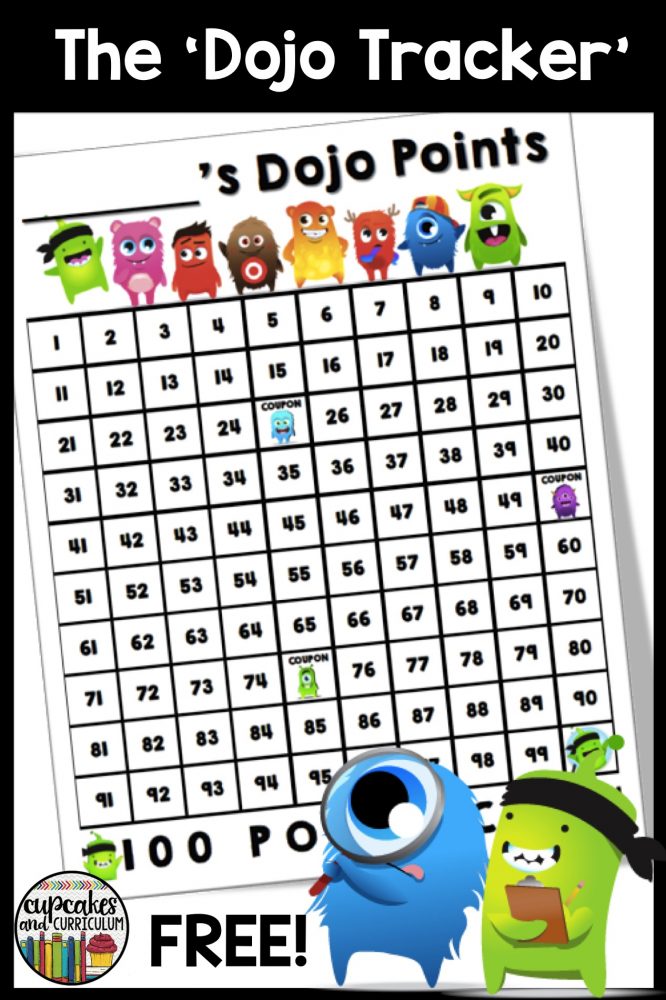
Every 25 boxes on the Dojo Tracker is marked COUPON. When a student colored in a coupon box, they picked from a coupon jar full of rewards. Not tangible prizes. Not things that cost me money. Just small privileges kids actually get excited about.
Here are some of the coupons I rotated through the jar. All free, all simple:
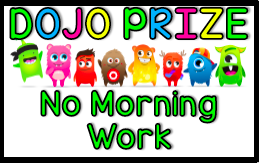
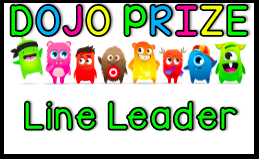
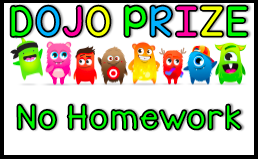
Certain coupons got saved for a special place in the jar, reserved only for students who hit the 100 Point Club. Those were the bigger privileges. Lunch Bunch with me. A full pajama day. The kind of rewards kids worked weeks toward.
Reaching 100 points became its own celebration in my classroom. Kids noticed when a classmate hit it. The momentum carried through the whole year.
I built this system back when I was teaching first grade, and a lot has changed about how we think about public behavior tracking. If I were running it today, I’d keep the tracker exactly as is (personal, student-owned, progress-focused), and I’d pair it with a bigger emphasis on building a positive classroom community so the rewards are one piece of a much bigger picture, not the whole picture.
I’d also lean harder on whole-class strategies. If you’re building out your approach from scratch, these three classroom management strategies that actually work are where I’d start.
The Dojo Tracker won’t solve every Class Dojo rewards headache, but it solved mine. My students knew exactly where they stood, the coupon system gave them something concrete to work toward, and I stopped doing sticky-note math at dismissal.
If you want to try it, the full printable is free. Drop your email below and I’ll send it straight to your inbox.
Looking for more classroom management ideas that hold up Monday through Friday? Read about my favorite behavior management tool next.