
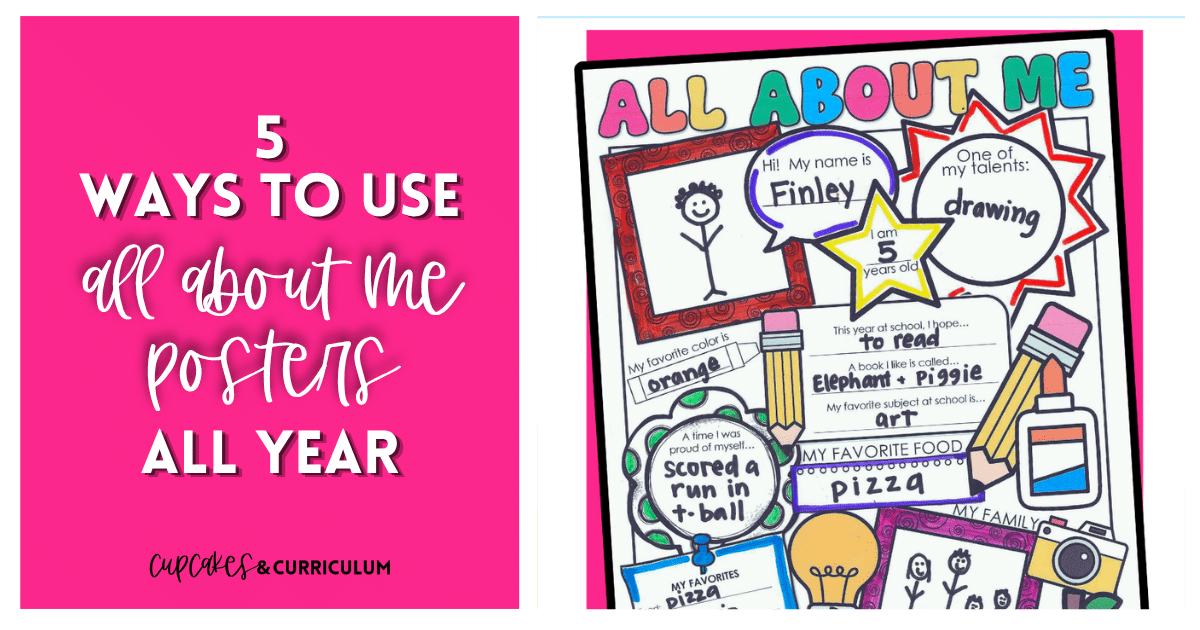
I’m going to be honest with you. The first few years I used All About Me posters in 1st and 3rd grade, they were almost busywork. We’d do them the first week of school, kids would fill in their favorite color and what they wanted to be when they grew up, I’d hang them up, and that was it. By October half of them were curling at the corners and nobody was looking at them.
That’s the real problem with this activity, and it’s the one nobody talks about. The posters themselves are great. The way most of us use them is the issue.
Once I started using these posters intentionally, with a plan for how they’d show up across the whole year, they stopped feeling like filler and started doing real work. They became a tool for building relationships in your classroom, a parent communication piece, and a year-end reflection moment. Below are five ways to actually put them to work, based on what worked in my 1st and 3rd grade classrooms (and what I wish I’d done sooner).
The first day of school is a fire hose. You’ve got nervous kids, parent emails, supplies to inventory, and a million little tasks competing for your attention. An All About Me poster is one of the few activities that gives every kid something meaningful to do for 20-30 minutes while you handle everything else.
The trick is to set it up as a real activity, not a worksheet to fill out and forget. Tell students upfront that their poster is going to live in the classroom all year. Kids treat work differently when they know other people will see it for more than five minutes.
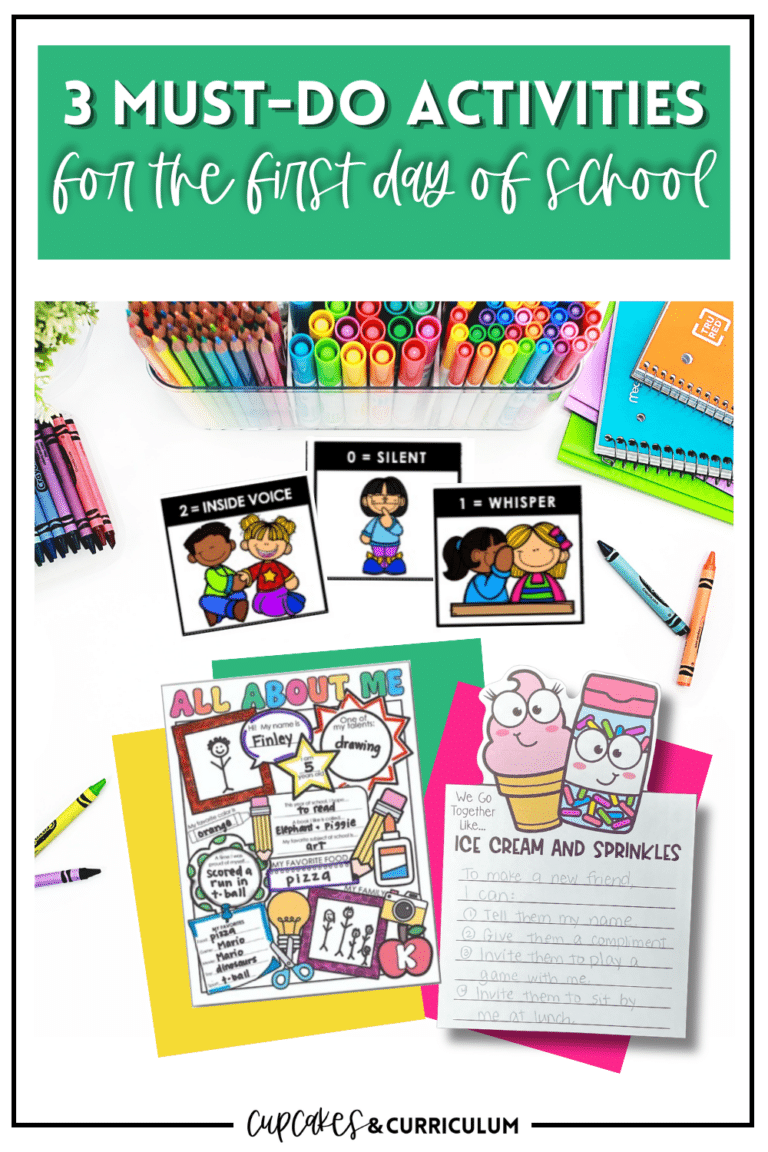
For more first-day ideas that pair well with this, my post on 3 must-do activities for the first day of school covers a few other options to round out your day.
Try this: While students work, walk around with a clipboard and jot down one specific thing each kid mentions on their poster (a pet’s name, a sport, a favorite food). Use it later that week to start a 1-on-1 conversation. “Hey, how’s Bingo doing this week?” hits different than “How’s school going?”
This was one of my favorite uses, especially in 1st grade. When a student’s birthday came around, their poster came down off the wall and got a temporary upgrade. We’d add a paper crown, a “today is my day” banner, or just a fresh photo, and that student got to share their poster with the class as part of their birthday moment.
For summer birthdays, we’d do half-birthdays in the same month. No kid got skipped just because they were born in July.
Try this: On birthday week, have classmates write a sticky note compliment to add around the birthday student’s poster. By the end of the day, that kid is walking out with 20+ pieces of paper proof that their classmates noticed something good about them. They keep them. Trust me.
Print the posters as full-size pages, hole-punch them, and add them to a binder labeled “Our Class.” Drop the binder in your classroom library.
Sounds simple. It works in a way that surprised me. Kids actually check it out. Especially in 1st grade, when reading other kids’ names and answers feels like real reading practice. In 3rd, students would flip through during indoor recess and find connections they hadn’t noticed before. (“Wait, you also have a little brother named Ben?”)
The class book also becomes a self-correcting community-building tool. The kid who feels left out can quietly look through it and find someone who shares a favorite anything. That has happened in my classroom more times than I can count.
Try this: Add a “What I Learned About My Classmates” page to the back of the binder. Leave it blank at the start of the year. Whenever a student notices something they didn’t know about someone, they add a sentence. By June it’s full.
This is the use I wish I’d discovered in my first year of teaching. When parents come in for fall conferences, you have maybe 15 minutes to communicate a lot. Most of that time gets eaten by reading scores, behavior summaries, and academic next steps.
Pull out their child’s All About Me poster and start there.
It’s a 60-second move that completely changes the tone of the conversation. Parents see what their kid said about themselves at school. They see their kid’s handwriting, their kid’s drawings, their kid’s actual voice. Before you’ve talked about a single test score, the parent already knows you see their child as a person, not a data point. That trust pays off in every conversation that follows.
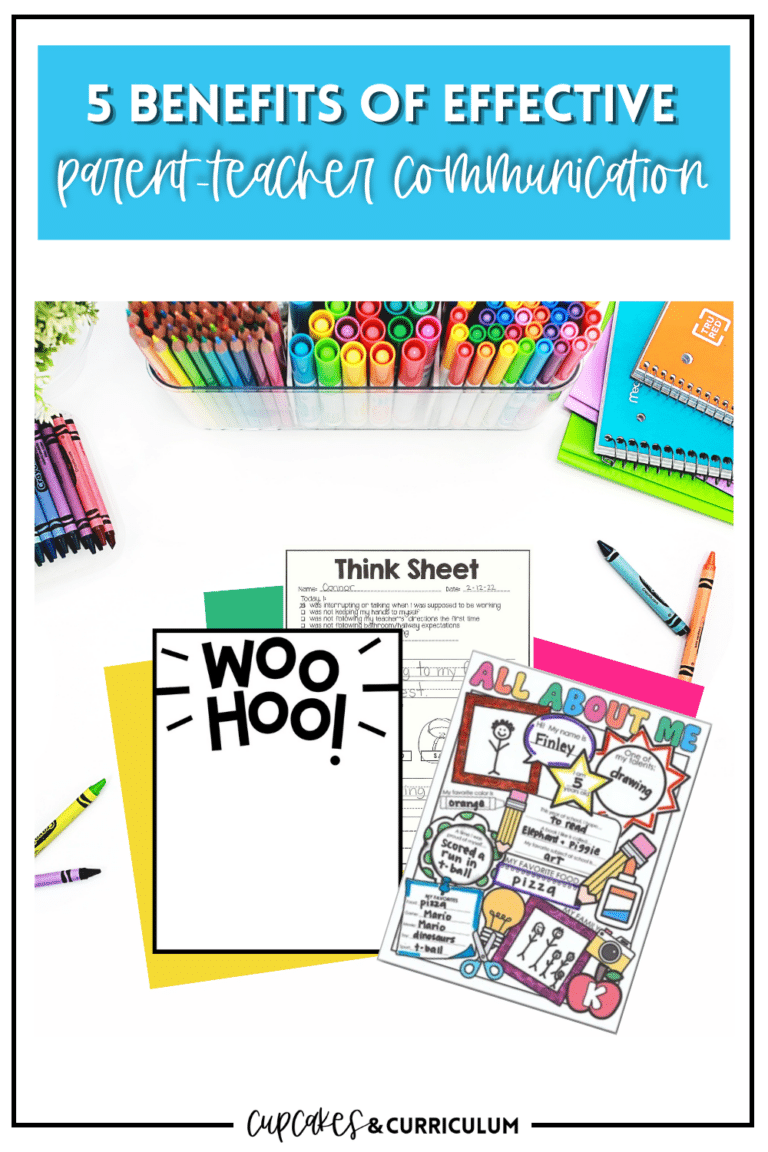
For more on this, my post on parent-teacher communication covers other ways to build that relationship from day one.
Try this: Before conferences, attach a sticky note to each child’s poster with one specific positive observation you’ve made about them so far. When you pull the poster out at the start of the conference, you’ve got an instant, personal opener.
In the last week of school, hand each student a fresh blank All About Me poster. Have them fill it out again. Then give them their original from August.
The reactions are SO worth it. Kids notice their own handwriting changes. They laugh at things they used to like. They see goals they wrote in September and realize they actually accomplished some of them. In 3rd grade especially, this becomes a real reflection moment, not just a cute activity.
You can send both posters home stapled together as a keepsake, or keep one and send one home. Parents love this one as much as the kids do.
Try this: On the back of the May poster, have students write a short letter to “Future Me.” Mail those letters to families over the summer, or hand them out on the last day. It’s a 5-minute activity that turns into something a family keeps for years.
A few things I learned the hard way:
1. Tell students from day one where the poster is going. Knowing it’ll be displayed, used at conferences, and revisited at the end of the year changes how much effort they put in. Kids match the stakes.
2. Don’t laminate them in August. I know it’s tempting. But you’ll want to add to them throughout the year (sticky notes, birthday additions, year-end comparisons), and lamination locks that out.
3. Keep them somewhere kids can see them. Not a closet, not a binder you forget about. The whole point is that the posters become part of the room.
4. Build in at least one revisit per quarter. Birthday spotlight, conference week, mid-year goal check-in, year-end reflection. Four touchpoints across a school year is the difference between busywork and a real classroom tool.
5. Take a photo of every poster before sending the original home. You’ll thank yourself when you want to remember what your class looked like five years from now.
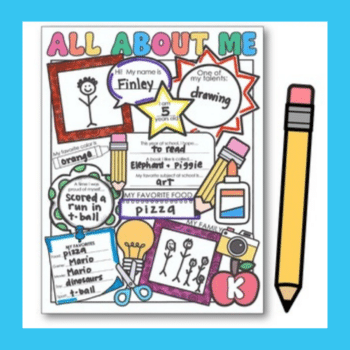
If you want a ready-made version with prompts that scale by grade level, my All About Me Posters include K-6 versions in one bundle. Same content, age-appropriate prompts, so you don’t have to rebuy if you change grade levels next year.
If you’d rather build your own, the prompts that have worked best at every grade level are: my full name, my family, my favorite book, what I’m good at, what I want to learn this year, and one goal for the school year. Skip “favorite color” and “favorite food.” They’re forgettable. The keepers are the ones that show who the kid actually is.
An All About Me poster takes 30 minutes to make and can do real classroom work for the next nine months if you set it up right. The trick isn’t the poster. It’s the plan you have for it after the first week.
Pick one or two of the five uses above and try them this year. You don’t need all five to make this activity worth the time. You just need a plan that goes past Labor Day.
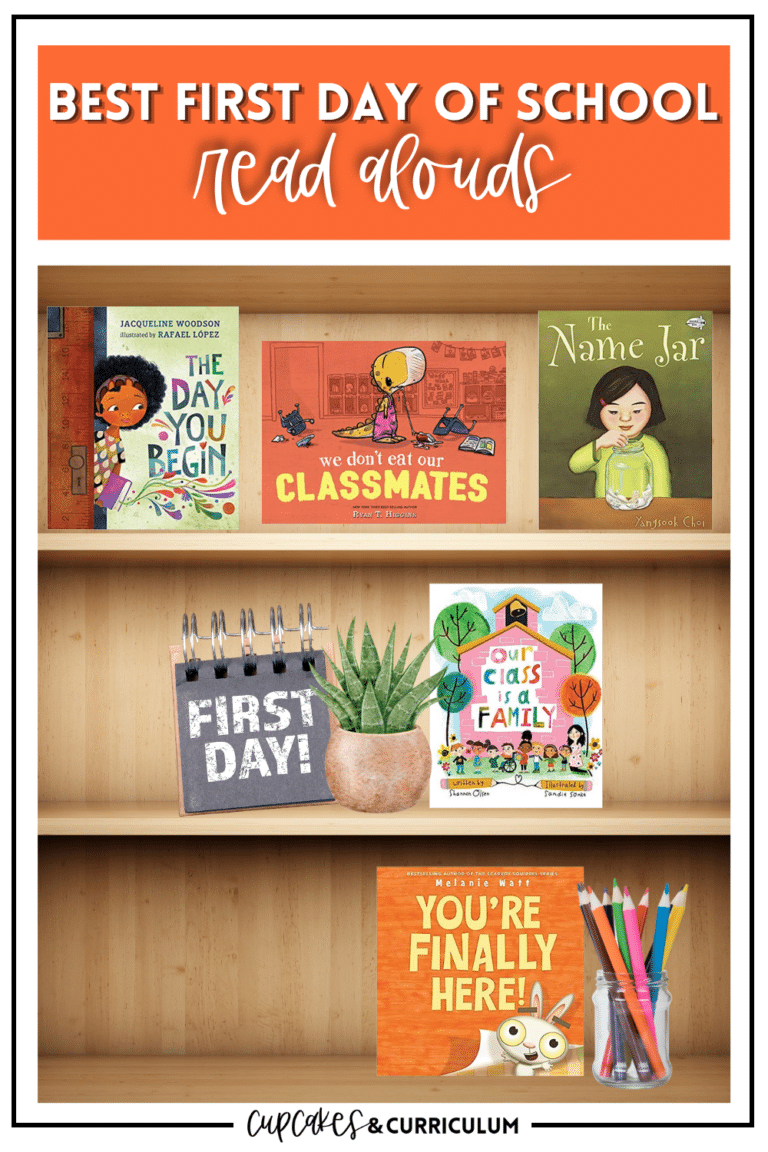
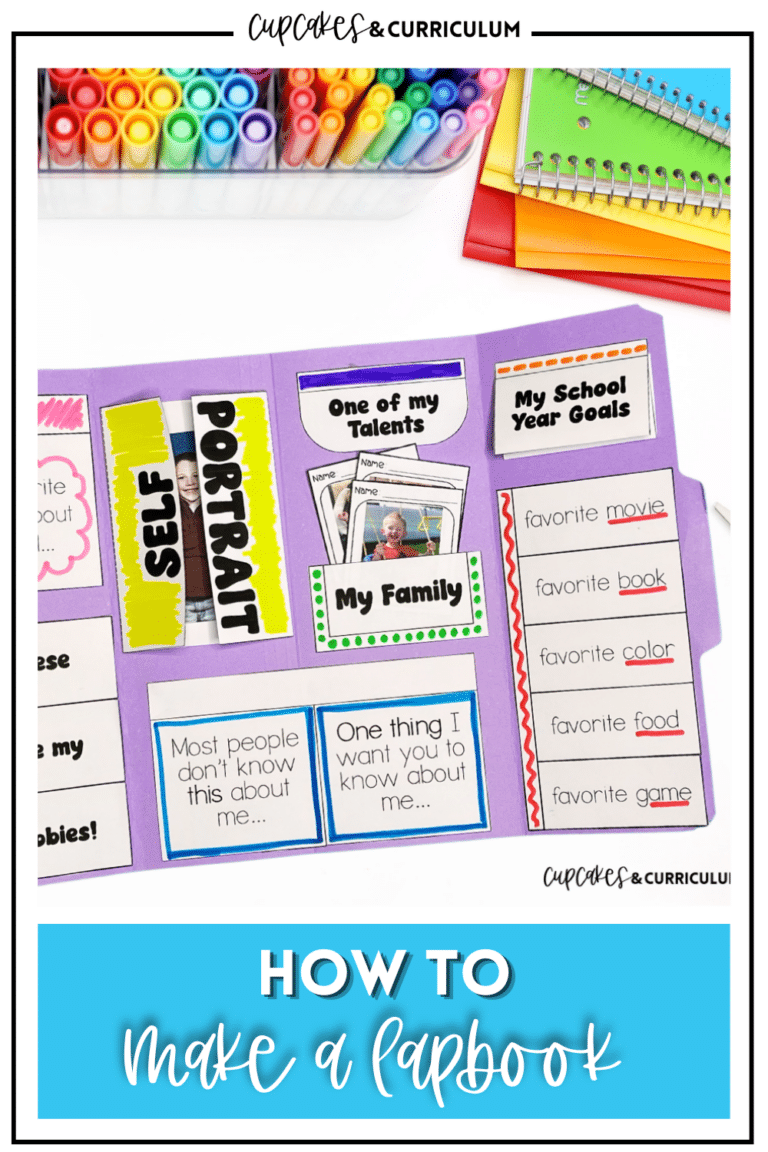
For more back-to-school ideas, check out my first-day-of-school read-alouds and the back-to-school lapbook project for another activity that builds classroom community fast.